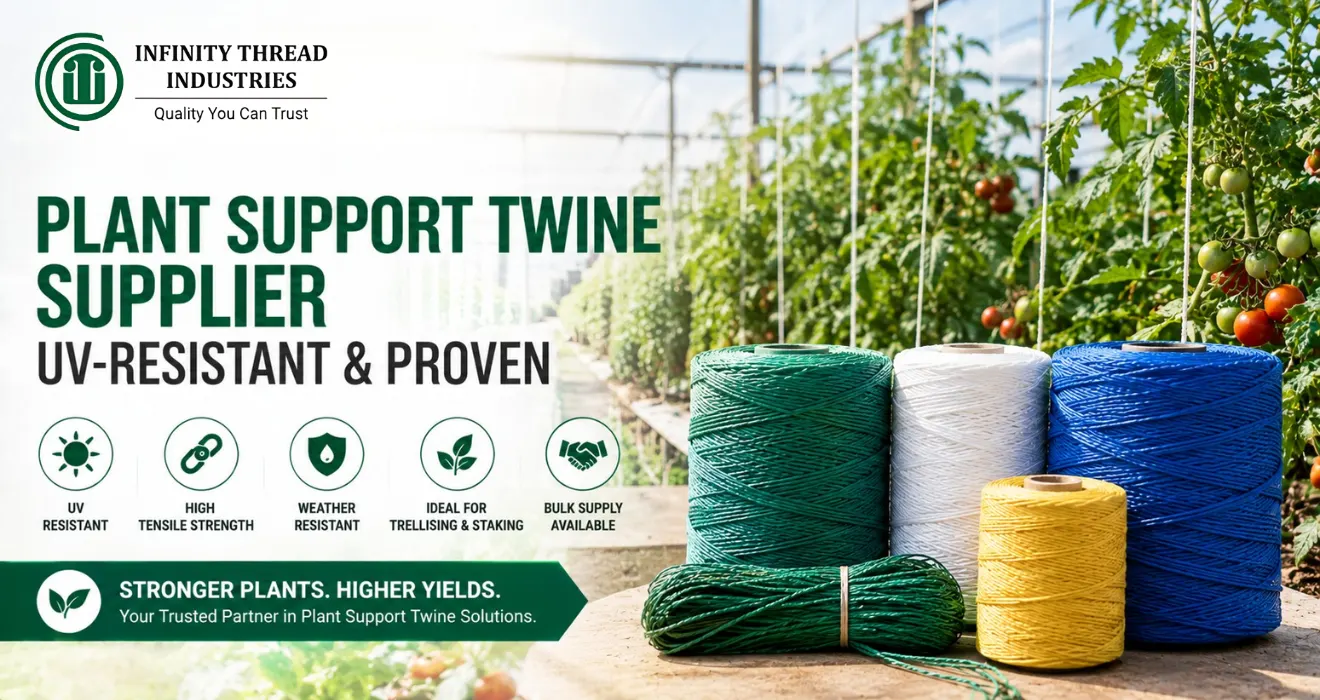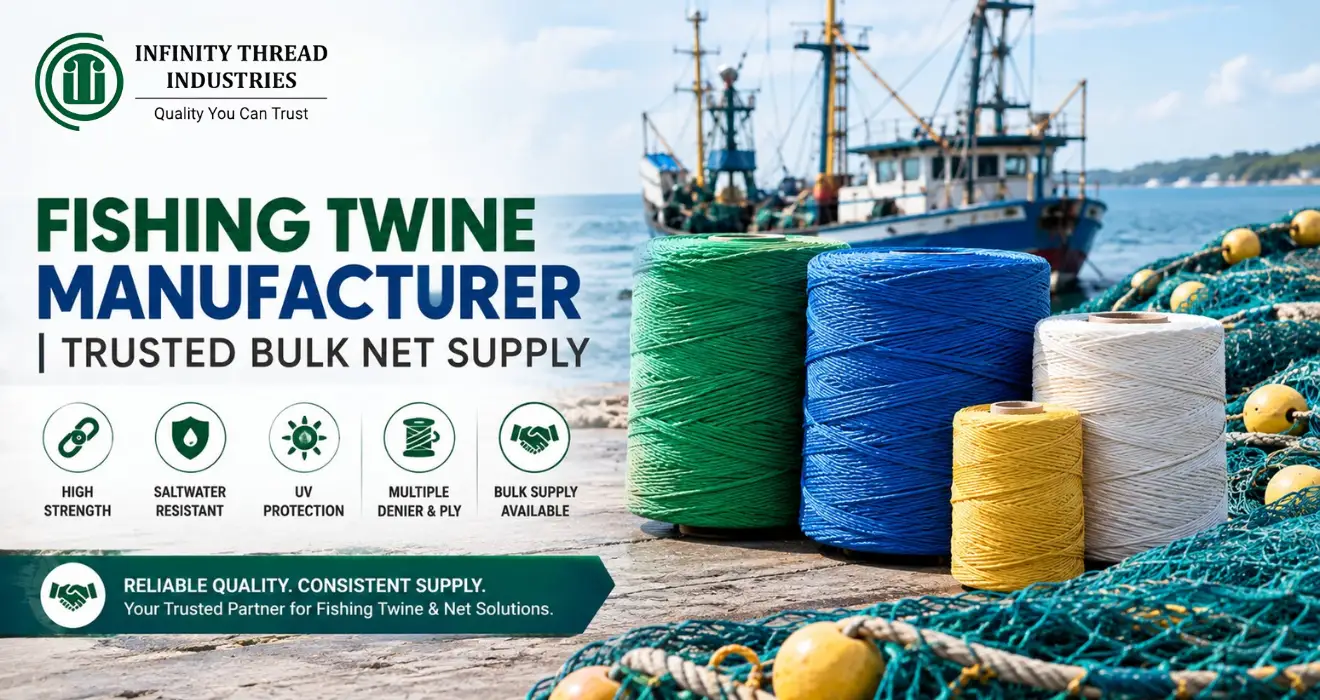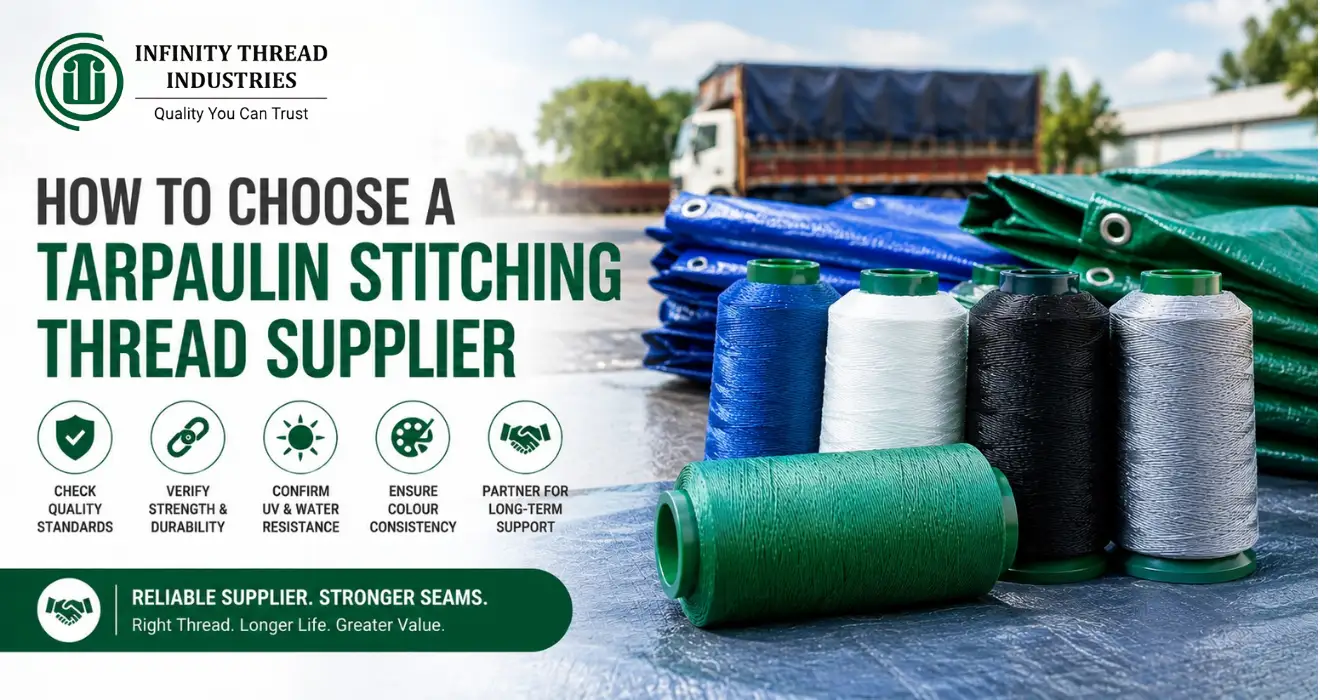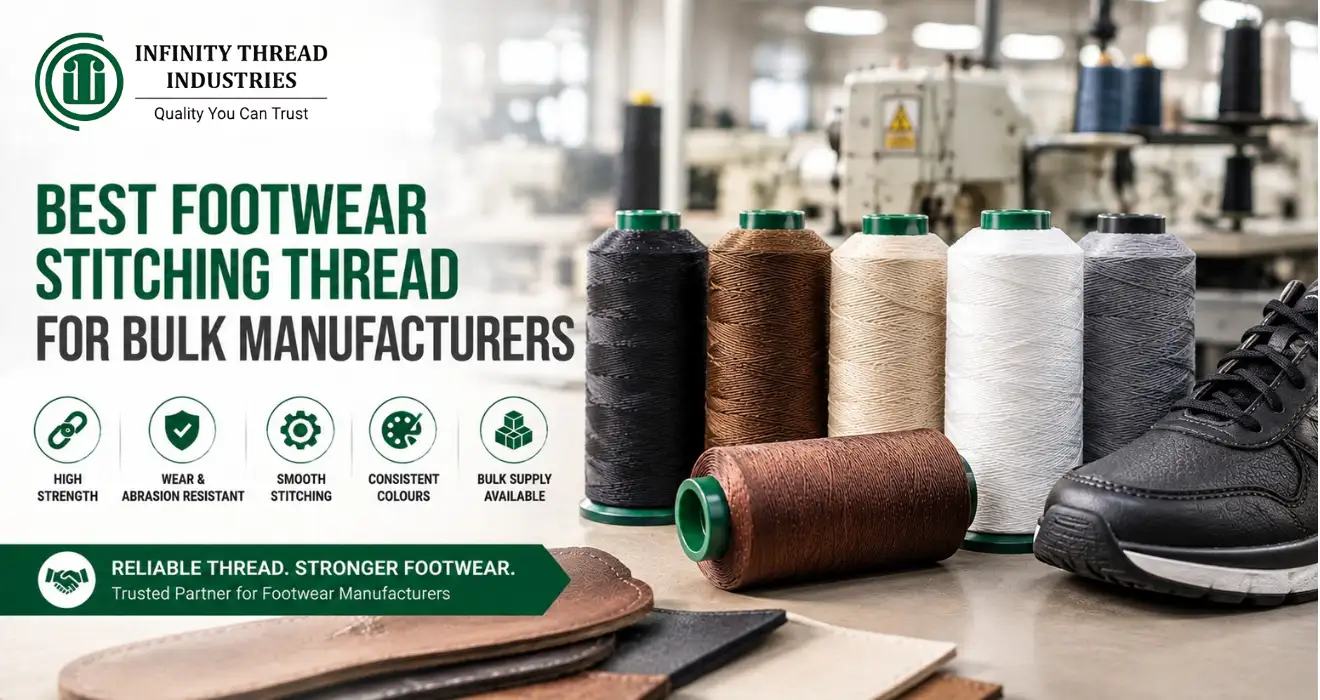

They search for “industrial thread manufacturer India,” get 50 results, pick the supplier with the lowest per-kg rate, and place a bulk order. Three weeks later, their machines are snapping thread mid-run, or the consignment colour doesn’t match the approved sample, or the tensile specs are off by 20%.
By then, the damage is done — production delays, wasted material, a frustrated client at the other end.
The truth is, choosing an industrial thread supplier isn’t just a price decision. It’s a technical one. And the manufacturers who understand that difference are the ones worth working with.
What Makes an Industrial Thread 'High Performance'?
Not all thread is equal. That sounds obvious — but the gap between commodity thread and high-performance industrial thread is wider than most buyers realise until something breaks.
High-performance industrial thread has to do more than hold a seam. Depending on the application, it needs to resist UV degradation, survive thousands of machine cycles without fraying, tolerate temperature extremes, resist chemical exposure, and maintain consistent tension across an entire production run. A mattress stitching thread and a fishing net twine are both “threads” — but they’re built for entirely different failure modes.
Here’s what actually defines performance at the manufacturing level:
Raw material quality. The best industrial threads are made from 100% continuous filament polyester or nylon yarn, not spun staple fibre. Filament yarns are smoother, stronger, and more uniform — which matters enormously when you’re running at high machine speeds.
Ply bonding. This is one of the most underappreciated quality factors. Multiple plies need to be properly bonded so they don’t separate during processing or under load. A thread that looks fine on the spool can open up and cause skipped stitches or breakage once it’s under tension on a sewing machine.
Finishing treatments. Heat setting, wax coating, and chemical treatments determine how the thread handles on a needle — and how it behaves in end-use conditions. A thread without proper finishing will cause drag, heat build-up on the needle, and inconsistent seam performance.
So when you’re evaluating a supplier, the question isn’t just “what denier do you offer?” It’s “how is the yarn sourced, how are the plies bonded, and what finishing process do you use?”
If the supplier can’t answer those questions in detail, that tells you something.
The 5 Key Technical Specifications You Must Verify Before Buying
Before you place a bulk order with any industrial thread manufacturer in India, these are the five specs you need to confirm in writing — not just verbally.
Denier & Thread Count
Denier measures the linear mass density of the thread — essentially, how thick it is. A 210 denier thread is much finer than a 1000 denier one. Thread count (Ticket/TKT number) expresses the same thing in a slightly different format — TKT 20 is heavier than TKT 60.
Why this matters: the wrong denier for your needle gauge causes either skipped stitches (too fine) or needle breakage and fabric damage (too heavy). Get the denier spec confirmed against your machine specifications, not just your last supplier’s spool label.
Tensile Strength & Elongation
Tensile strength is the force required to break the thread. Elongation is how much it stretches before it breaks. Both matter.
For bag stitching, you want high tenacity with low elongation — you need strength, not stretch. For shoe lasting or upholstery, moderate elongation is actually desirable because it helps the thread conform to curves without snapping under stress.
According to the Textile Research Journal, variance in tenacity across a production batch of more than ±5% is a reliable indicator of inconsistent raw material sourcing — and that kind of variance is exactly what causes random thread breaks in production.
Request a test report with both values. Any serious manufacturer will have one.
Abrasion & UV Resistance
If your application involves outdoor use — fishing nets, agriculture nets, marine ropes, outdoor upholstery — UV resistance isn’t optional. Standard polyester degrades under prolonged UV exposure unless it’s been stabilised. Ask specifically whether the thread is UV-treated and for how long it’s been tested under accelerated weathering conditions.
Abrasion resistance matters for anything moving against a hard surface — shoe lasting thread, tyre cord, bag closing thread. The test to ask for is the Martindale abrasion test or equivalent.
Machine Compatibility
This one gets overlooked constantly. A thread can have excellent tensile specs and still perform badly if it’s not matched to your machine speed, needle size, and tension settings.
Different machines — lockstitch, chainstitch, overlock — require different thread constructions. Ask the manufacturer whether the thread has been tested on high-speed sewing machines and at what SPM (stitches per minute) range it’s rated.
Quality Testing Standards
Look for ISO 9001:2015 certification as a baseline. It confirms the manufacturer has documented quality management processes — not just that they make good thread, but that they make it consistently.
OEKO-TEX Standard 100 is worth checking if your end product involves human skin contact (garments, medical textiles, automotive interiors). MSME registration and an IEC (Import Export Code) are both indicators that the manufacturer operates formally and can handle export documentation if needed.
Why Surat, Gujarat Is India's Premier Thread Manufacturing Hub
Surat doesn’t get the same press as Tirupur or Ludhiana, but for synthetic industrial thread — polyester, nylon, polypropylene — it’s arguably the most advanced manufacturing cluster in the country.
Here’s why.
Surat sits at the heart of India’s synthetic textile industry. The city processes more synthetic yarn than anywhere else in India, which means manufacturers here have direct access to the highest quality filament yarn at scale — and they’ve spent decades developing the processing expertise to match.
According to the Synthetic & Rayon Textiles Export Promotion Council (SRTEPC), Surat accounts for over 60% of India’s synthetic fabric production — and that concentration of raw material, engineering talent, and infrastructure extends into industrial thread manufacturing as well.
The machinery ecosystem matters too. Surat’s manufacturers run modern twisting and winding machines, inline quality testing, and precision dyeing — the kind of setup that produces consistent output across large batches, which is exactly what industrial buyers need.
This is different from what you’d find in Tirupur, which specialises in cotton threads for garment applications. For industrial and packaging thread — bag closing, fishing twine, high-tenacity polyester for automotive or construction — Surat manufacturers have the raw material access, the technical depth, and the production scale that others simply don’t.
7 Warning Signs of a Low-Quality Thread Supplier
I’ve seen these patterns enough times to list them with confidence. If a supplier does more than two of these, walk away.
Warning Sign | What It Signals |
No sample available before bulk order | They know the sample won’t hold up |
Can’t provide a test report on tensile strength | No in-house testing capability |
Price is more than 25% below market average | Raw material compromise somewhere |
No certifications (ISO, OEKO-TEX, MSME) | Informal operation, inconsistent quality |
Denier range is vague or “as per requirement” without specs | They’re sourcing from whoever’s cheapest that week |
Lead time is always “flexible” — no actual schedule | Production isn’t their priority |
No IEC code or export documentation capacity | Can’t support cross-state or international orders properly |
And here’s the one nobody mentions: if a supplier is reluctant to tell you where their raw yarn comes from, that’s a red flag. Legitimate manufacturers are proud of their yarn sourcing. It’s part of their quality story.
How Infinity Thread Industries Manufactures 80,000 kg/Month
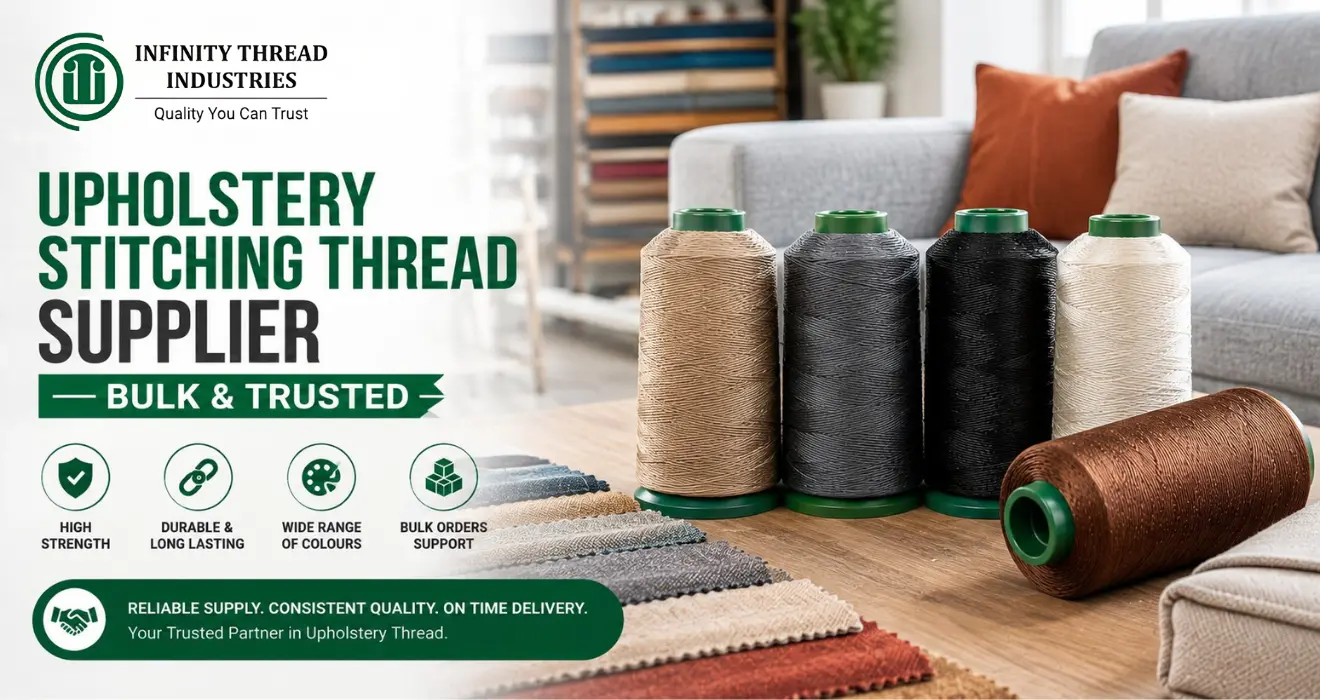
At Infinity Thread Industries, the production process starts with 100% continuous filament polyester and nylon yarn — not blended, not recycled, raw filament grade.
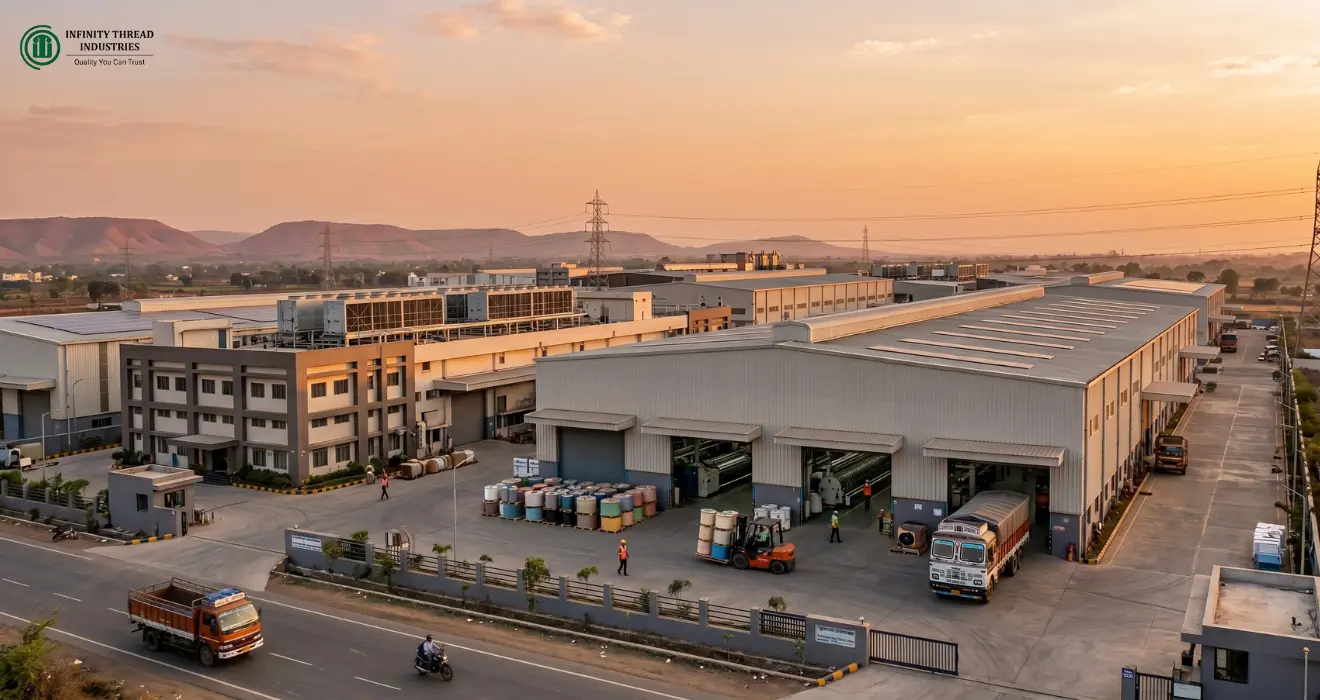
The facility covers 15,300 sq. ft. (see the full infrastructure) and runs a dedicated process for each product category. Bag closing thread, high tenacity polyester for footwear and mattress stitching, nylon fishing twines, upholstery thread — each has its own tension, twist, and finishing specification.
The bonding process is what sets the product apart. Multiple plies are bonded using a controlled process that prevents ply separation under industrial machine speeds — which is the main cause of thread breakage on high-speed lockstitch and chainstitch machines.
80,000 kg per month isn’t just a volume figure. It’s a consistency figure. At that output, quality control can’t be random sampling — it’s built into the line. Every batch goes through inline tension testing before it reaches a spool.
View the complete product range here — from TKT 20 high-tenacity polyester to 1000 denier bag stitching thread and nylon fishnet twine.
If you need high tenacity industrial threads specifically for heavy-duty applications, this product category covers the full spec range.
My Take: What Actually Separates Good Suppliers from Great Ones
Here’s something I’ve found consistently over years of working with industrial buyers: the suppliers who cause the fewest problems are the ones who push back on vague specs.
A mediocre supplier takes whatever you send and confirms it. “1000 denier polyester, yes, no problem.” A good one asks: what machine are you running? What’s the end application? What’s the seam construction? Because the answers change the product.
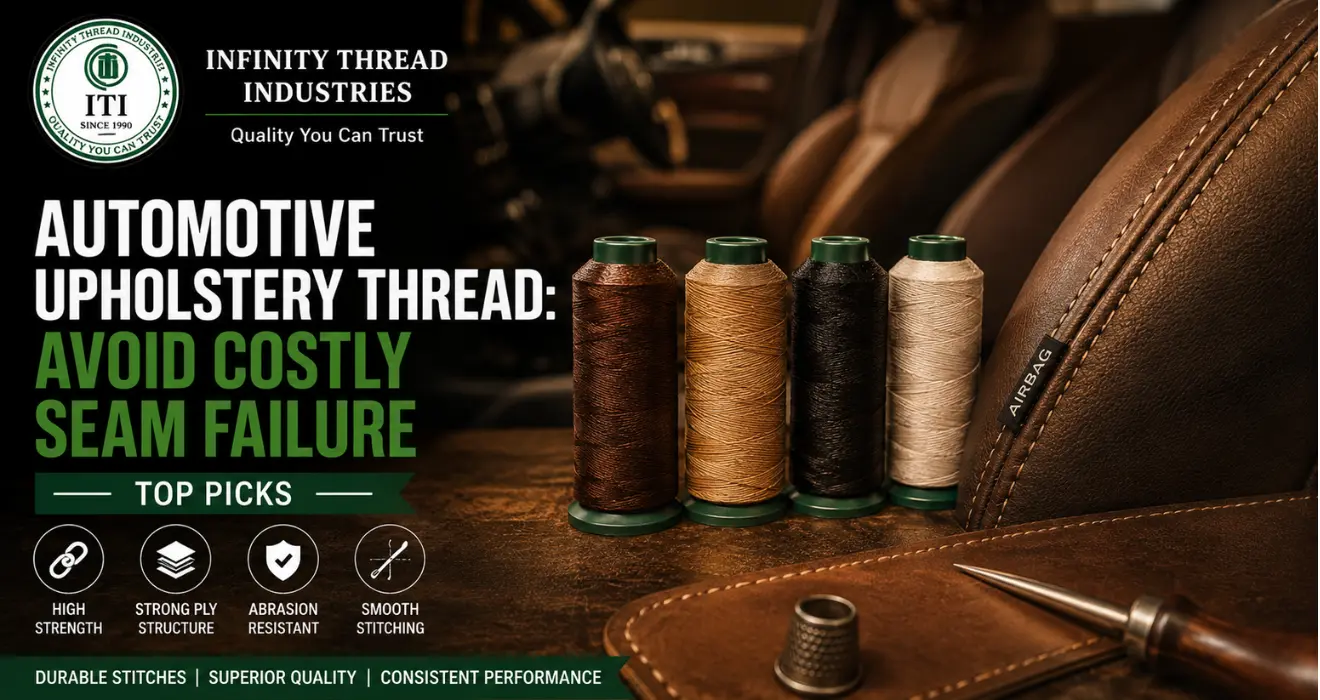
At Infinity Thread Industries, that’s exactly how we approach custom orders. When a buyer from the automotive upholstery space came to us needing thread for high-speed sewing on leather seat covers, the initial spec was just “TKT 40 polyester.” We asked about needle size, machine speed (they were running at around 4,500 SPM), and whether the leather had any silicone treatment. Based on those answers, we adjusted the wax coating and bonding to reduce friction at that specific speed — and reduced their thread break rate significantly.
That’s not special. It’s just what actually knowing your product looks like. But plenty of manufacturers don’t do it.
Read more about how we work and what’s behind the operation — the full manufacturing story is there.
One Last Thing
If you’re evaluating suppliers right now, the simplest test is this: ask for a sample with a test report, ask what machine types the thread has been tested on, and ask where the raw yarn comes from.
Good manufacturers answer all three without hesitation.
Get in touch for a bulk quote — our team will come back with specs, pricing, and a sample arrangement within one business day.
Frequently Asked Questions
Look for ISO 9001:2015 as the baseline — it confirms consistent quality management processes. OEKO-TEX Standard 100 matters if your application involves skin contact or export to the EU. MSME registration and an IEC (Import Export Code) confirm the manufacturer is formally registered and can support bulk B2B orders. For pharma or food packaging applications, ask about food-grade compliance separately.
Request a sample batch and test it on a Universal Testing Machine (UTM) — this gives you breaking strength in grams or Newtons and elongation percentage. Any manufacturer worth working with should be able to provide their own test report alongside the sample. At Infinity Thread Industries, we provide test reports with every shipment, not just on request.
Standard lead time for most specifications runs 7–21 days, depending on order size, any custom colour or denier requirements, and current production schedule. Custom-dyed orders take longer because dyeing has its own scheduling window. Contact the team directly with your exact spec and quantity — we can give you a realistic timeline, not a generic one.
Yes. We manufacture across a wide denier range — from fine sewing thread to heavy 1000+ denier industrial grades — and offer custom colour options for larger orders. Colour matching is done against your supplied standard or Pantone reference. Share your full specification and we'll confirm feasibility and MOQ.
They serve different markets. Tirupur's strength is cotton-based thread for garment manufacturing — it's a garment industry hub. Surat specialises in synthetic threads: polyester, nylon, polypropylene — for industrial, packaging, marine, and technical applications. If you need bag closing thread, high-tenacity upholstery thread, fishing twine, or anything engineered for load-bearing use, Surat manufacturers have the raw material access and technical infrastructure that Tirupur doesn't. For pure cotton garment thread, Tirupur is the right place to look.

Founder of Digi Segment and HV Digital Marketing
SEO Strategist & Digital Marketing Expert
Hardik Vaghani is a digital marketing professional and SEO strategist based in Surat, Gujarat, India. He is the founder of Digi Segment, a content and insights platform covering SEO, digital marketing, AI tools, and online growth strategies, and the founder of HV Digital Marketing, a results-focused digital marketing agency helping local and service-based businesses rank on Google and generate consistent leads.
With hands-on experience in Search Engine Optimisation, Technical SEO, Google Ads, Meta Ads, and Content Strategy, Hardik has helped businesses across industries including e-commerce, real estate, healthcare, home improvement, and solar companies improve their organic visibility, local search rankings, and lead generation through ethical, white-hat strategies.
He specialises in Core Web Vitals optimisation, on-page SEO, keyword research aligned with search intent, and building scalable content frameworks that rank. At Digi Segment, Hardik shares practical, experience-backed insights, case studies, and step-by-step guides to help marketers, entrepreneurs, and small businesses grow online.
When he is not optimising websites, Hardik is building digital tools, writing SEO-focused content, and working with his agency clients to turn Google visibility into measurable business growth.
Expertise: SEO | Technical SEO | Google Ads | Meta Ads | Content Strategy | Core Web Vitals | WordPress | Digital Marketing | Lead Generation | Local SEO