
A bag closing line in Surat was losing four to five bags a shift last monsoon. Same machine, same tension settings, same operator. The only thing that changed was the twine. Someone had switched suppliers to save two rupees a kilo, and the new spool was polypropylene where the old one was polyester. Nobody flagged it until the breakage numbers showed up on the floor report.
That’s the real-world version of the polyester twine vs polypropylene twine industrial question. It’s not academic. It shows up as snapped bales, torn FIBC bags, and net repairs that eat into a Tuesday. And most buyers never actually get a straight answer, because most twine sellers just push whatever they have in stock.
We manufacture both materials at Infinity Thread Industries, so we don’t have a horse in this race the way a single-material supplier does. Here’s what actually separates them, and where each one earns its place on your factory floor.
The Short Version
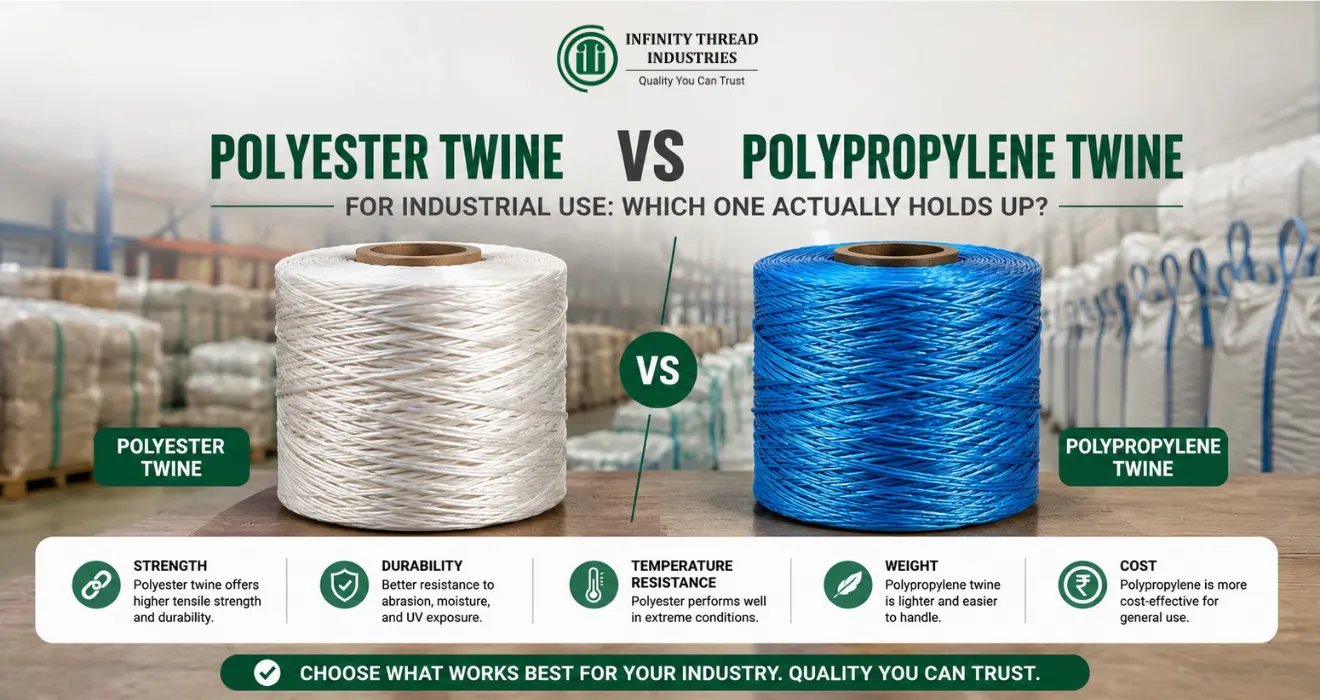
Polyester twine wins on strength, UV resistance, and low stretch, so it’s the better call for outdoor loads, marine use, and anything that sits in the sun for months. Polypropylene twine is lighter, cheaper, and floats, which makes it fine for short-term bundling, indoor packaging, and jobs where the twine won’t see direct sunlight for long. Neither one is universally “better.” The application decides it, not the price tag.
Where Buyers Get This Wrong
Most purchase managers shop twine on price per kilo. That’s the wrong first question. Two spools can look identical on a shelf and behave completely differently under load, heat, or six months of open-yard storage.
The pain shows up later. A farmer re-ties bales that snapped mid-season. A packaging unit gets returns because bags split in transit. A fishing crew replaces nets twice as often as they budgeted for. Nobody connects it back to twine choice until someone actually asks: polyester or polypropylene, and why.
What’s Actually Different Between Polyester and Polypropylene Twine
Both are synthetic, both come off similar spinning and twisting lines, and both look like white cord to the untrained eye. The chemistry underneath is where they split.
Polyester twine is made from PET fiber (the polymer family, not the pet food kind, worth clarifying because it confuses first-time buyers). Polypropylene twine comes from PP resin, a simpler, lighter-weight polymer chain. That single difference in molecular structure drives almost everything else on this list.
Tensile Strength and Load-Bearing Capacity
Polyester twine industrial strength is the reason it dominates rigging, lifting straps, and heavy baling. It’s stiffer, holds tension better, and doesn’t give under sustained pull the way PP does. If your application involves suspended loads, high-speed baling machines, or anything where a snapped strand means a safety incident, polyester is the safer default.
Polypropylene isn’t weak, exactly. It’s just a different tier. It’s fine for light-to-medium loads and it’s noticeably cheaper to produce, which is why it dominates budget-conscious packaging and short-haul bundling.
UV, Weather and Moisture Resistance
This is where the gap gets wide. Polypropylene fiber breaks down fast under direct sun unless it’s specifically UV-stabilized during extrusion. Research on fiber UV resistance compiled by Service Thread found that untreated polypropylene fiber can lose most of its strength after just a handful of days under intense UV exposure. Polyester, by contrast, holds up far longer outdoors and keeps most of its strength even after a year in the sun.
That’s not a minor footnote if your twine sits in an open warehouse yard, a farm shed, or on a fishing boat deck. UV resistant industrial twine, in most cases, means polyester unless the polypropylene has been specifically stabilized for outdoor duty.
Moisture tells a different story. Polypropylene is hydrophobic. It barely absorbs water, so it dries fast and floats. That’s genuinely useful for marine rescue lines and wet-environment packaging. Polyester absorbs a little more but doesn’t rot, and it keeps its strength wet or dry, which matters more for long-duration outdoor use than short-term water contact.
Stretch, Knot Retention and Handling
Polyester has very low stretch, which means knots stay put and tension stays consistent on a baler or stitching machine. Polypropylene has more give. On some jobs that’s an advantage, it absorbs shock loads better, but on a high-speed FIBC jumbo bag line, that extra stretch can throw off stitch consistency.
Picking Between the Two by Application
Baler twine vs polyester twine for outdoor agricultural use usually isn’t even a contest once you factor in a full season of sun exposure. Here’s how it actually breaks down by industry.
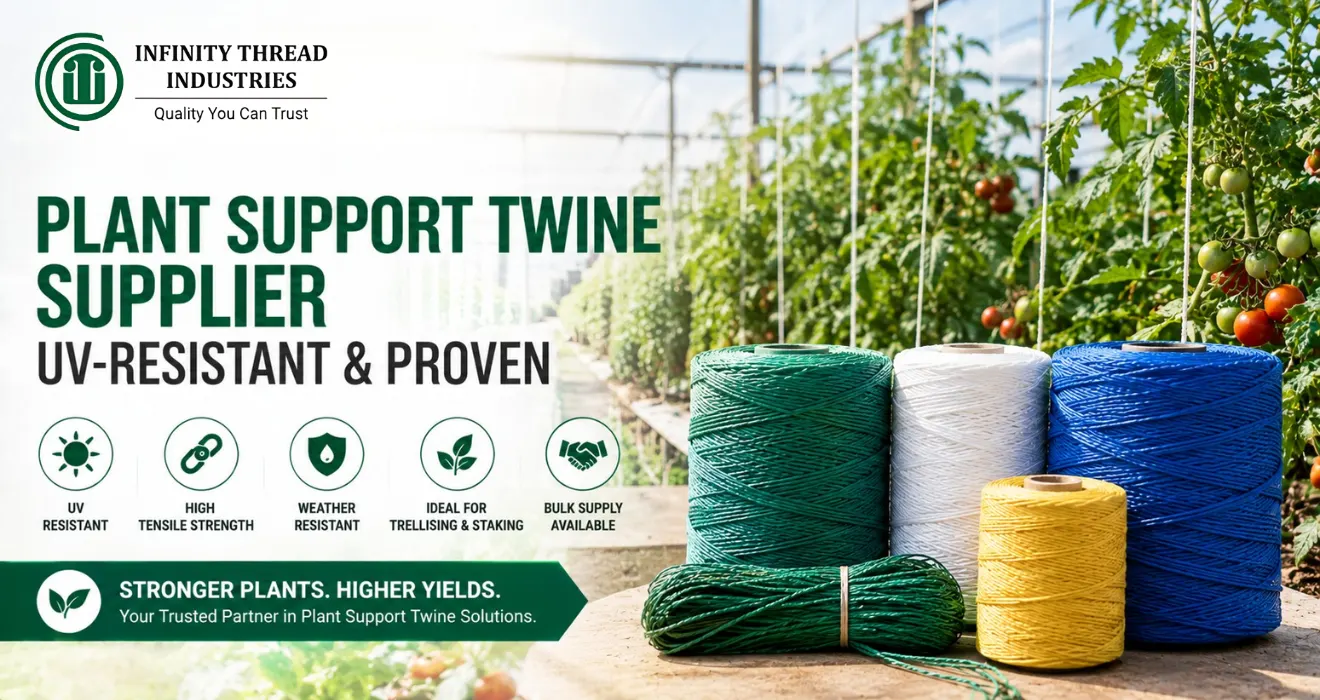
Agriculture and baling. Crop tying, bale binding, orchard and vineyard support all sit outdoors for weeks or months at a stretch. Polyester holds strength through that exposure. Polypropylene works for short-cycle jobs, but expect faster degradation if bales sit in the field past a few weeks.
Packaging and bundling. Indoor, short-duration, budget-sensitive. This is polypropylene’s home turf. Woven sack stitching, carton bundling, and general warehouse tying don’t need polyester’s premium and don’t get enough UV exposure to justify the extra cost.
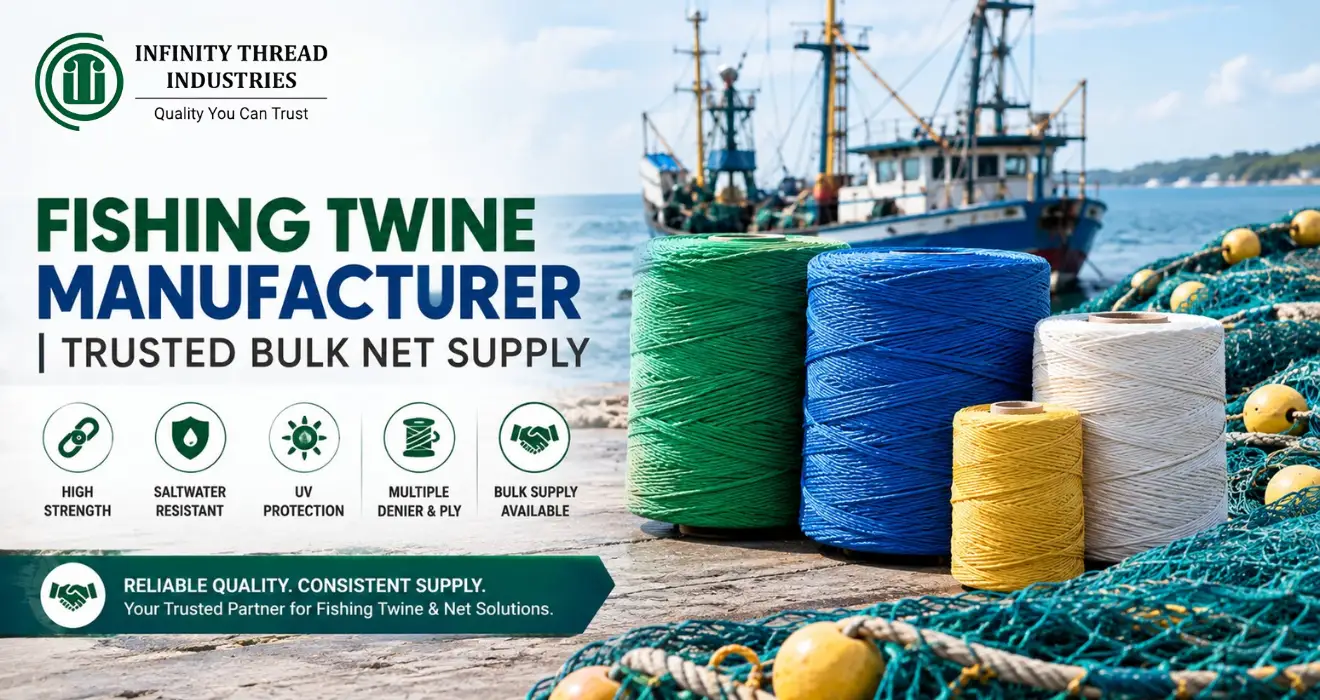
Marine and fishing. Split decision. Polyester wins for mooring lines, rigging, and anything that stays rigged for months, where low stretch and UV resistance matter more there than buoyancy. Polypropylene wins for lines that need to float, like rescue throw-lines or temporary buoy tethers.
Construction and mason line. Mason line needs to hold a taut, straight reference line across a job site, sometimes in direct sun for days. Low stretch and UV stability both favor polyester here, though many contractors still use treated polypropylene for cost reasons on short jobs.
Cost is the part nobody wants to talk about honestly. A polyester spool typically runs anywhere from 15% to 40% higher than an equivalent polypropylene spool, depending on denier and ply count. That gap matters on a large order. But it only tells half the story. Run the math on cost-per-month-in-service instead of cost-per-kilo, and the picture flips for any outdoor application. A spool that lasts a full season beats two spools that need replacing mid-season, even if the second option looked cheaper on the purchase order.
There’s also a middle path a lot of buyers don’t know exists. UV-stabilized polypropylene, with titanium dioxide or similar additives worked into the fiber during extrusion, closes some of that resistance gap while keeping most of the cost advantage. It’s not a full substitute for high-tenacity polyester on heavy loads, but for medium-duty outdoor jobs where budget is tight, it’s worth asking your supplier whether stabilized PP is on offer before defaulting straight to polyester.
📞 Get a Free Sample or Technical Consultation
How to Choose the Right Industrial Twine in Four Steps
- Check where the twine will actually sit: indoor, outdoor, or wet.
- Estimate the load it needs to carry without snapping.
- Factor in how long it needs to last before replacement.
- Match the denier and construction (twisted or braided) to your machine.
The result is a spool that won’t become next month’s floor complaint.
What I’d Tell a Client Walking Into Our Factory
I’ve had this exact conversation more times than I can count on our production floor in Surat. A buyer walks in wanting “the cheapest twine that works,” and I always ask the same question back: cheapest for how long?
Back in 2022, a packaging client of ours switched an entire order from polyester to polypropylene to shave costs on a bulk FIBC contract. Six weeks in, their returns spiked. Bags stored outside the warehouse were splitting at the stitch line because the twine had gone brittle under sun exposure nobody had accounted for. We swapped them back to high-tenacity polyester twine for the outdoor-stored batches and kept polypropylene for the indoor stock. Returns dropped within the next production cycle.
Honestly? I think a lot of buyers over-index on the per-kilo price and under-index on where the product actually lives after it leaves the factory. That one detail, indoor versus outdoor storage, decides more twine failures than any other variable I’ve seen in almost two decades in this business.
The Numbers That Actually Matter
Geofabrics data referenced in the same ServiceThread report showed polyester fiber retaining more than two-thirds of its strength after a full year of sun exposure, a gap wide enough that it should change a purchasing decision on its own for any outdoor application.
Separately, baler twine breaking-strength data published by Grepl Group shows polypropylene ranging from roughly 27.5 kgf up to 660 kgf, depending on denier and construction, proof that “polypropylene is weaker” isn’t universally true either. The right grade of PP twine can outperform a low-denier polyester spool. Denier and construction matter as much as the base polymer.
Polyester Twine vs Polypropylene Twine at a Glance
| Factor | Polyester Twine | Polypropylene Twine |
| Tensile strength | Higher, holds under sustained load | Moderate, varies widely by denier |
| UV resistance | Excellent, lasts months to a year outdoors | Poor unless UV-stabilized |
| Stretch | Very low, stable knots | Higher, more shock absorption |
| Water behavior | Slight absorption, doesn’t rot | Hydrophobic, floats |
| Cost | Higher per kilo | Lower per kilo |
| Best fit | Outdoor, marine, heavy baling, rigging | Indoor packaging, short-cycle bundling |
FAQ
Q: What is the difference between polyester twine and polypropylene twine?
A: Polyester twine (PET) is stronger, lower-stretch, and far more UV-resistant. Polypropylene twine (PP) is lighter, cheaper, and floats, but degrades faster in direct sunlight unless it’s been stabilized.
Q: How do I choose between polyester and polypropylene twine for industrial use?
A: Start with where it’s stored and how long it needs to last. Outdoor, long-duration, or heavy-load jobs point to polyester. Indoor, short-cycle, budget-driven jobs point to polypropylene.
Q: Is polyester twine more expensive than polypropylene twine?
A: Yes, usually by a noticeable margin per kilo. But factor in replacement frequency. A polypropylene spool that fails outdoors in six weeks often costs more over a season than the polyester alternative.
Q: Which twine is best for beginners setting up a small packaging line?
A: Polypropylene, in most cases. It’s cheaper to test with, easier on entry-level machines, and forgiving if your denier choice isn’t perfectly dialed in yet.
Q: Does polypropylene twine actually work outdoors, or does it break down fast?
A: It breaks down fast unless it’s UV-treated at extrusion. Untreated PP left in direct sun for a season is a common cause of field failures we see reported by farm and packaging clients.
Q: My baling twine keeps snapping under load, what’s going wrong?
A: Three usual suspects: wrong denier for the load, PP twine that’s been sitting outdoors too long, or a tension setting mismatched to the twine’s stretch profile. Check denier first.
Q: Which twine is best for agriculture and baling in 2026?
A: For anything sitting in a field for more than a few weeks, polyester still leads on longevity. For short-cycle indoor baling, well-made PP twine holds up fine and costs less.
Q: Can polyester and polypropylene twine be used together on the same job?
A: Absolutely, and a lot of our clients do exactly this: polyester for the outdoor-stored batches, polypropylene for anything that stays indoors. It’s not an either-or decision at the plant level.
Final Word
Neither material is the universal answer, whatever a sales rep with only one product line will tell you. Match the twine to where it actually lives: sun, load, and duration, and the decision mostly makes itself.
Still unsure which twine fits your production line? We broke down the material differences in more depth in our guide to polyester vs nylon thread for industrial use, and if baling or field use is your priority, our ultimate guide to mason line covers stretch and tension in more detail. For FIBC and woven sack lines specifically, see our buyer’s guide to woven sack stitching thread, and if you’re comparing suppliers first, our post on choosing the best industrial thread manufacturer in India is worth a read before you commit to a spool size.
If you’re ready to spec a batch, browse our polyester twine range or check our agriculture twine options for field-ready deniers. Nilesh Devani and the team at Infinity Thread Industries work with packaging, agriculture, and marine clients on exactly this kind of material decision daily. Reach out if you’re stuck between the two.

Founder of Digi Segment and HV Digital Marketing
SEO Strategist & Digital Marketing Expert
Hardik Vaghani is a digital marketing professional and SEO strategist based in Surat, Gujarat, India. He is the founder of Digi Segment, a content and insights platform covering SEO, digital marketing, AI tools, and online growth strategies, and the founder of HV Digital Marketing, a results-focused digital marketing agency helping local and service-based businesses rank on Google and generate consistent leads.
With hands-on experience in Search Engine Optimisation, Technical SEO, Google Ads, Meta Ads, and Content Strategy, Hardik has helped businesses across industries including e-commerce, real estate, healthcare, home improvement, and solar companies improve their organic visibility, local search rankings, and lead generation through ethical, white-hat strategies.
He specialises in Core Web Vitals optimisation, on-page SEO, keyword research aligned with search intent, and building scalable content frameworks that rank. At Digi Segment, Hardik shares practical, experience-backed insights, case studies, and step-by-step guides to help marketers, entrepreneurs, and small businesses grow online.
When he is not optimising websites, Hardik is building digital tools, writing SEO-focused content, and working with his agency clients to turn Google visibility into measurable business growth.
Expertise: SEO | Technical SEO | Google Ads | Meta Ads | Content Strategy | Core Web Vitals | WordPress | Digital Marketing | Lead Generation | Local SEO